
Every Player Matters: How Jim Valvano’s Coaching Approach Can Help Us Take Back Sports
12.10.25
Most fans remember Jim Valvano for the inspirational moments that came later in his life — but the heart of his coaching legacy was built long before that. It lived in locker rooms, in practice gyms, and on the end of the bench.
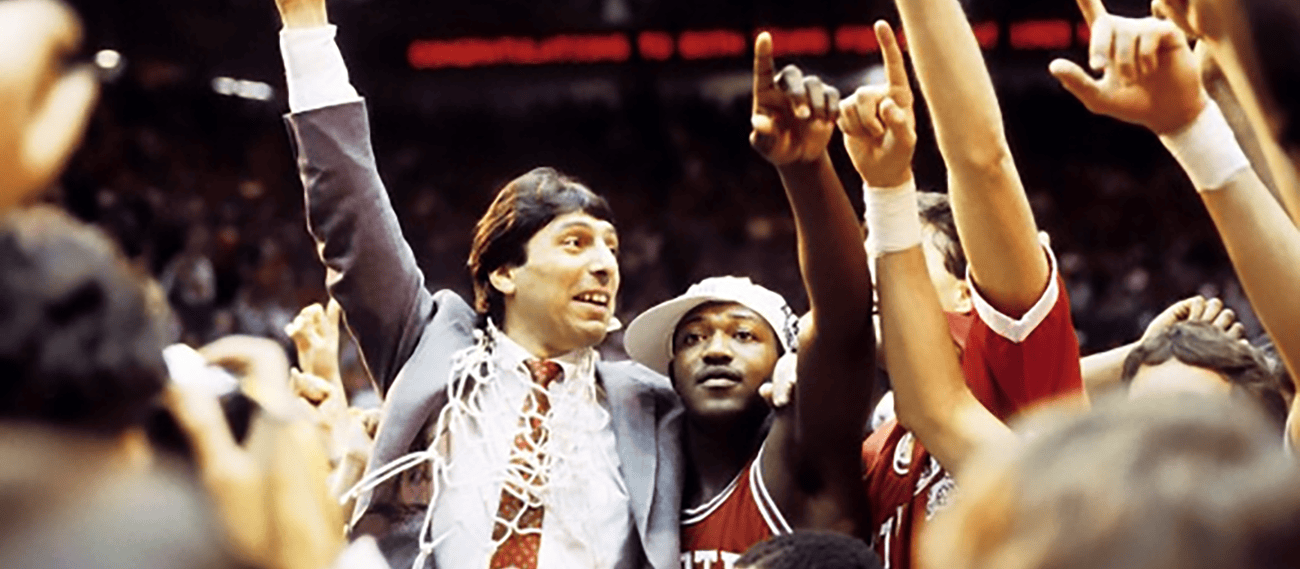
Before he ever became a legendary figure, Valvano was a coach obsessed with connection. He believed deeply that every player, not just the stars, had a role in a team’s success. That belief helped power his 1983 NC State team to one of the most improbable championship runs in sports history — a run that simply could not have happened without his bench players.
As ESPN shines a spotlight on “Jimmy V” this month, it’s an ideal opportunity to revisit what he stood for as a coach — and how his approach resonates powerfully with the goals of our Take Back Sports movement.
Valvano’s Biggest Advantage Wasn’t Talent — It Was Trust
The 1983 NC State team wasn’t filled with five-star recruits. They weren’t blowing teams out all season long. They survived on togetherness, resilience, and a belief that everyone mattered.
Valvano was famous for telling his players:
“When you’re part of my team, you’re important. All of you.”
Former players recall how he talked to the last man on the bench with the same energy and intentionality as his leading scorer. He believed that if the entire roster felt valued, prepared, and trusted, then his team could reach its true potential. .
And the results proved him right:
- In the ACC Tournament, role players like Cozell McQueen, Terry Gannon, and Ernie Myers came up huge at critical moments.
- Bench players were asked to step into major roles as injuries mounted — and they were ready.
- Valvano regularly changed defensive looks mid-game by involving players he believed could give the team the spark it needed. The players on his bench weren’t an afterthought — they were a weapon.
Valvano didn’t just use his bench.
He believed in it.
He prepared it.
He developed it.
He depended on it.
In today’s youth sports landscape, where playing time concerns often fracture teams and alienate families, his approach feels more relevant than ever.
A Team Connected Is a Team Capable
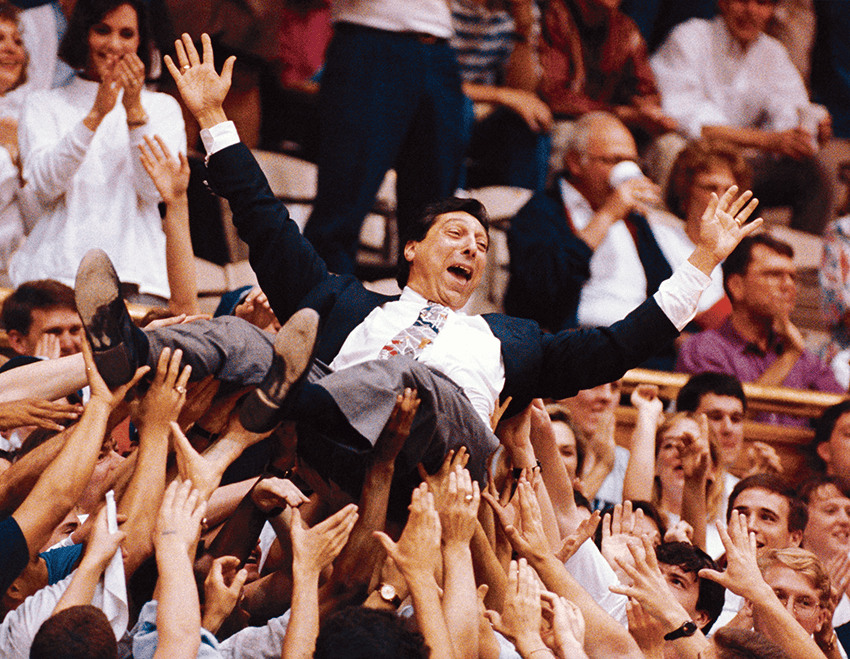
One of Valvano’s core coaching habits was to intentionally build relationships across the entire roster. He made sure players connected with each other, not only with him.
He wanted every athlete to understand:
- You belong here.
- You have a role.
- Your presence matters.
That sense of belonging creates the kind of connection that elevates a team from a collection of individuals to something more powerful.
This idea is at the heart of Take Back Sports.
Youth athletes today face intense pressure, rising specialization, and environments where playing time or performance determines who is treated as “important.” But as Take Back Sports emphasizes, sports should reconnect young people — not divide them.
The Bench Is a Classroom — If We Let It Be One
Take Back Sports teaches that sports are a place for development, not just performance — and the bench plays a huge role in that.
Valvano understood this intuitively.
Instead of seeing the bench as a demotion or of lesser value, he saw it as a teaching space:
- Players learned to see the game differently.
- They talked through matchups.
- They supported teammates.
- They stayed mentally engaged and emotionally invested.

This concept mirrors Take Back Sports’ push to redefine what “success” looks like for athletes in youth sports:
- Success is focusing on learning and development, not just on playing time and winning.
- Success is staying engaged, not checking out because you’re temporarily on the sideline.
- Success is belonging to a team that values you — especially when it’s not your moment on the court.
When coaches use the bench to teach, connect, and encourage, they build athletes who understand the game, who grow through adversity, and who remain committed to the team.
What Coaches Can Learn From Valvano
Jim Valvano coached in a different era — but his most important lessons feel like they were written for today:
1. Value every player.
Consider each athlete’s unique needs and circumstances – respond in ways that affirm your care.
2. Prepare your bench.
When you invest in every athlete, your team becomes resilient.
3. Create connections everywhere — especially where players feel overlooked.
Great teams are powered by trust – assist athletes in growing their social relationships.
4. Build a culture where every athlete knows they belong.
Young people stay in sports — and thrive in sports — when they feel valued.
Coach Valvano lived these ideas long before they needed to become a movement.
He showed the world that basketball — and all sports — are at their best when the entire team is connected, engaged, and valued.
These core principles live at the heart of our Take Back Sports initiative and what the teams at ESPN and PCA are working to improve across youth sports.
We invite you to visit www.takebacksports.org to learn more, take the pledge, and join us!